
An electric kettle is a convenient kitchen appliance for preparing hot water for tea, coffee and other everyday needs. It saves time during busy mornings and makes it easier to prepare hot beverages whenever you want. However, frequent use can leave mineral deposits, water stains and residue inside the kettle. If these deposits are ignored, they can affect the appearance of the kettle and may change the taste of the water you boil.
Regular cleaning helps keep your kettle fresh, hygienic and ready for everyday use. The good news is that you do not need complicated cleaning products or expensive equipment for routine maintenance. With a few simple household ingredients and the right method, you can remove mineral deposits and keep your appliance in good condition.
This guide explains how to clean a kettle step by step, how to remove stubborn limescale and how to maintain your appliance safely. We will also look at the features of Sujata Appliances’ electric kettle and explain how regular care can help you get the most out of your kitchen appliance.
Why Is It Important to Clean Your Electric Kettle?
Every time you boil water, minerals naturally present in the water can settle on the inner surface of the kettle. These deposits are commonly known as limescale and often appear as white flakes, chalky patches or a rough layer at the bottom. They are more likely to develop in areas with hard water, where mineral deposits can accumulate faster with regular use.
Cleaning your kettle regularly helps prevent these deposits from becoming difficult to remove. A clean interior also helps keep boiled water free from loose mineral flakes and unwanted residue. If you notice that your kettle is taking longer to heat water or that white particles are appearing in your cup, it may be time to clean and descale it.
Regular electric kettle cleaning also involves caring for the exterior, lid, spout and other accessible areas where water marks and dust can collect. A simple cleaning routine helps you maintain the appliance’s appearance while ensuring that you follow the manufacturer’s instructions for safe use.
What Do You Need to Clean an Electric Kettle?
Before starting, gather the materials you need so that you can complete the process without rushing. Most routine cleaning can be done with items commonly available at home, making it easy to maintain your kettle without using harsh cleaning chemicals.
Here is what you may need:
- White vinegar: Its acidity can help loosen mineral deposits that accumulate inside the kettle.
- Fresh lemon juice: This is another acidic option that can help with light limescale buildup.
- Clean water: You will need fresh water to rinse the kettle thoroughly after cleaning.
- Soft cloth or sponge: This is useful for wiping the exterior and cleaning accessible surfaces without scratching them.
- Soft cleaning brush: A small, non-abrasive brush can help clean accessible areas around the lid or spout, provided the manufacturer permits it.
You do not need to use every item in this list for each cleaning session. Choose a suitable descaling method based on the amount of buildup and the manufacturer’s care instructions. Avoid steel wool, abrasive scrubbers and harsh chemicals because they can damage the kettle’s surface or leave unwanted residue.
How to Clean a Kettle Step by Step
Cleaning an electric kettle is straightforward when you follow the correct order. Always check the appliance instruction manual before using vinegar, lemon juice or any descaling solution. The following steps explain a general method for routine cleaning and removing mineral deposits.
Step 1. Switch Off, Unplug and Cool the Kettle
Safety should always come first when cleaning an electrical appliance. Switch off the kettle, unplug it from the power socket and allow it to cool completely before opening or handling it. Never attempt to clean the kettle immediately after boiling water because the hot interior and remaining steam can cause burns.
Once the kettle has cooled, remove any remaining water and place it on a stable, dry surface. If the kettle has a separate power base, keep it away from the cleaning area and ensure that no water reaches its electrical contacts. Starting with a cool, empty kettle makes the remaining cleaning steps easier and safer.
Step 2. Prepare a Suitable Cleaning Solution
White vinegar diluted with water is a commonly used method for loosening limescale. Prepare a mixture of equal parts of white vinegar and water, unless the manufacturer’s instructions recommend a different dilution. If you prefer a milder smell, lemon juice may be another option, provided it is compatible with the kettle’s materials and care instructions.
Pour the solution into the kettle without exceeding its maximum fill line. Do not overfill it, as liquid may spill out during heating. If the appliance manual does not permit vinegar or lemon juice, use a manufacturer-approved descaling product instead. Choosing the correct cleaning solution helps loosen mineral deposits without exposing the kettle to unsuitable substances.
Step 3. Let the Solution Loosen the Deposits
Once the cleaning solution is inside the kettle, follow the manufacturer’s instructions for the appropriate treatment method. If the manual permits heating a diluted vinegar solution, heat it as directed, switch off and unplug the kettle, and allow the solution to sit for approximately 15 to 20 minutes. This gives the acidic solution time to loosen the mineral deposits from the inner surface.
If heating a descaling solution is not permitted, allow the solution to soak according to the product instructions instead. Never leave the kettle unattended while operating it, and do not attempt to open or handle it while the liquid is hot. For stubborn deposits, a second suitable cleaning cycle may be preferable to aggressive scrubbing.
Step 4. Empty the Kettle and Rinse Thoroughly
After the solution has had enough time to work, allow it to cool before carefully emptying the kettle. Rinse the interior several times with fresh water to remove the cleaning solution and loosen mineral deposits. Pay attention to the bottom and accessible areas around the spout, as residue can remain in these places.
If the kettle still has visible deposits, repeat the approved descaling process instead of scraping the surface with a metal object. Once the interior looks clean, fill the kettle with fresh water and boil it only if permitted by the manufacturer’s instructions. Discard that water and repeat the rinse or boil-and-discard process as needed to remove any remaining vinegar or lemon smell before regular use.
Step 5. Clean the Lid, Spout and Exterior
The inside of the kettle is not the only area that needs attention. Water marks, fingerprints and dust can collect on the outside, while mineral residue may accumulate around the lid and spout. Use a soft, slightly damp cloth to wipe the exterior, and clean accessible areas around the lid and spout carefully without forcing water into openings.
Never immerse the kettle, power cord, or electrical base in water. If the model has a separate power base, wipe it only as directed by the manufacturer and keep its electrical contacts dry. Avoid abrasive cleaning pads and strong chemicals that could damage the finish. Careful cleaning helps maintain the kettle’s appearance without putting its electrical components at risk.
Step 6. Dry the Kettle Before Using It Again
After cleaning and rinsing, make sure the kettle is empty and allow it to dry properly. Leave the lid open if the manufacturer’s instructions permit it, allowing moisture inside to evaporate. Wipe the exterior with a clean, soft cloth and check that the power base and electrical contacts remain dry before reconnecting the appliance.
Do not switch the kettle on if water has reached its electrical components or if you notice damage to the cord or body. If you are unsure whether the appliance is safe to use, consult an authorised service professional. Taking time to dry the kettle properly is an important part of safe electric kettle maintenance.
How to Remove Limescale from a Kettle
Limescale develops when minerals present in water accumulate on the inner surface of the kettle during repeated boiling. It often appears as white flakes, chalky marks or a rough layer at the bottom. If you want to remove limescale from kettle interiors, start with an approved descaling solution and allow it enough time to loosen the deposits before rinsing.
For light buildup, one cleaning cycle may be sufficient. Heavier deposits may require repeating the process according to the manufacturer’s instructions. Avoid scraping the interior with a knife, metal spoon or abrasive pad, as these can damage the surface and make maintenance more difficult. If mineral deposits persist after repeated cleaning, use a suitable manufacturer-approved descaler or seek advice from the appliance’s service team.
How Often Should You Clean Your Electric Kettle?
The frequency of cleaning depends on how often you use the kettle and the mineral content of your water. Households using hard water may notice limescale more quickly than those using softer water. Instead of following a fixed schedule alone, inspect the inside regularly and clean the kettle when you notice white deposits, visible stains or changes in the taste of boiled water.
The following table offers a practical starting point for routine maintenance. Adjust the schedule according to the buildup you observe and the care instructions provided with your appliance.
| Usage or water condition | Suggested approach |
| Frequent daily use | Check the interior regularly and wipe the exterior as needed |
| Hard water supply | Inspect often and descale when mineral deposits appear |
| Softer water supply | Inspect periodically and clean when needed |
| Visible white flakes or rough deposits | Carry out an approved descaling process |
| Water marks on the exterior | Wipe with a soft, damp cloth and dry thoroughly |
Regular inspection is more useful than waiting until a thick layer of limescale has formed. A simple routine can make cleaning easier and help you identify buildup before it becomes difficult to remove.
Common Mistakes to Avoid During Electric Kettle Cleaning
Although cleaning a kettle is relatively simple, using the wrong method can damage the appliance or create safety risks. One common mistake is cleaning the kettle while it is still plugged in or hot. Another is immersing the appliance in water, which can damage electrical components and create a risk of electric shock.
Avoid using steel wool, metal scrapers or harsh chemical cleaners unless a product is specifically approved by the manufacturer. Do not overfill the kettle with a cleaning solution, and never mix different cleaning chemicals. After descaling, rinse thoroughly and follow the instructions for preparing the kettle for use again. These precautions help keep the cleaning process safe and prevent unnecessary damage.
How Sujata Appliances’ Electric Kettle Supports Everyday Use
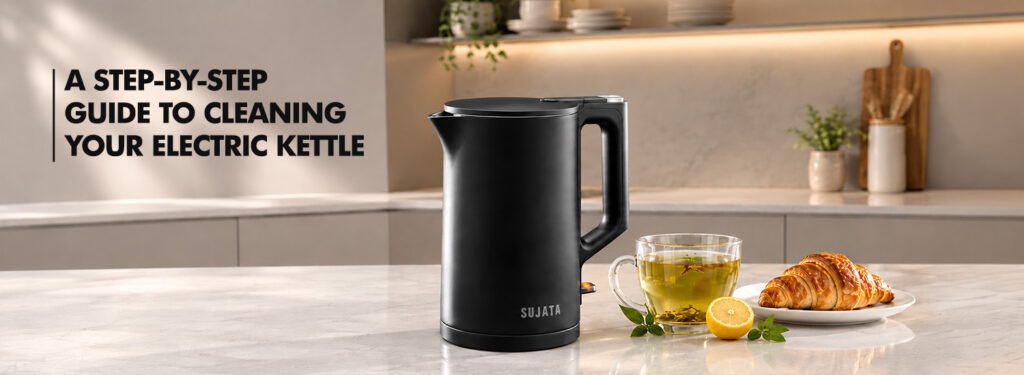
Sujata Appliances offers the EK01 electric kettle, designed for preparing hot water conveniently at home. It features a 1.5-litre stainless-steel tank and lid, a double-wall cool-touch exterior, a Strix controller and a three-way automatic shut-off function. The listed power consumption is 1380 W, and the model is designed with safety and everyday convenience in mind.
The three-way shut-off function helps stop operation when the water has boiled, when the kettle is lifted from its base and when there is no water inside. These features support convenient everyday use, but regular cleaning remains important for maintaining the kettle’s interior and exterior. Follow the care instructions supplied with the EK01 when cleaning or descaling it, particularly when selecting a cleaning solution for the stainless-steel interior.
You can explore the Sujata Appliances electric kettle range to review the EK01’s features and specifications. Checking the manufacturer’s instructions before cleaning will help you choose an appropriate method and maintain the appliance safely.
Keep Your Electric Kettle Clean with Regular Care
A clean kettle is easier to maintain and ready for preparing hot water for your everyday needs. By learning how to clean a kettle correctly, you can remove mineral deposits, maintain the interior and keep the exterior looking neat. The key is to use a suitable cleaning solution, rinse thoroughly and avoid methods that could damage the appliance.
Make electric kettle cleaning part of your regular kitchen routine rather than waiting for heavy limescale to develop. Inspect the kettle frequently, clean visible deposits when needed and follow the manufacturer’s instructions for safe maintenance. With consistent care, your Sujata electric kettle can remain a convenient part of your daily routine.
Frequently Asked Questions
1. Can I use baking soda to clean an electric kettle?
Baking soda may help loosen some residue, but it is not always effective against heavy limescale. Check your kettle’s care instructions before using it, and rinse the interior thoroughly after cleaning.
2. Why does my electric kettle develop a white layer inside?
The white layer is usually limescale caused by minerals in the water. It tends to build up faster in areas with hard water and can be removed using a suitable descaling method.
3. Can I clean my electric kettle without boiling a cleaning solution?
Yes, if the manufacturer’s instructions permit it. You can use an approved descaling solution and allow it to sit for the recommended time before emptying and rinsing the kettle thoroughly.
4. Is it safe to use an electric kettle immediately after descaling?
Rinse the kettle thoroughly with fresh water first. If the manufacturer’s instructions recommend boiling and discarding a batch of water, complete that step before using the kettle to prepare beverages.
5. How can I prevent limescale from building up in my electric kettle?
Empty leftover water after use, avoid leaving water standing for long periods and inspect the interior regularly. If you live in a hard-water area, you may need to descale the kettle more frequently.