
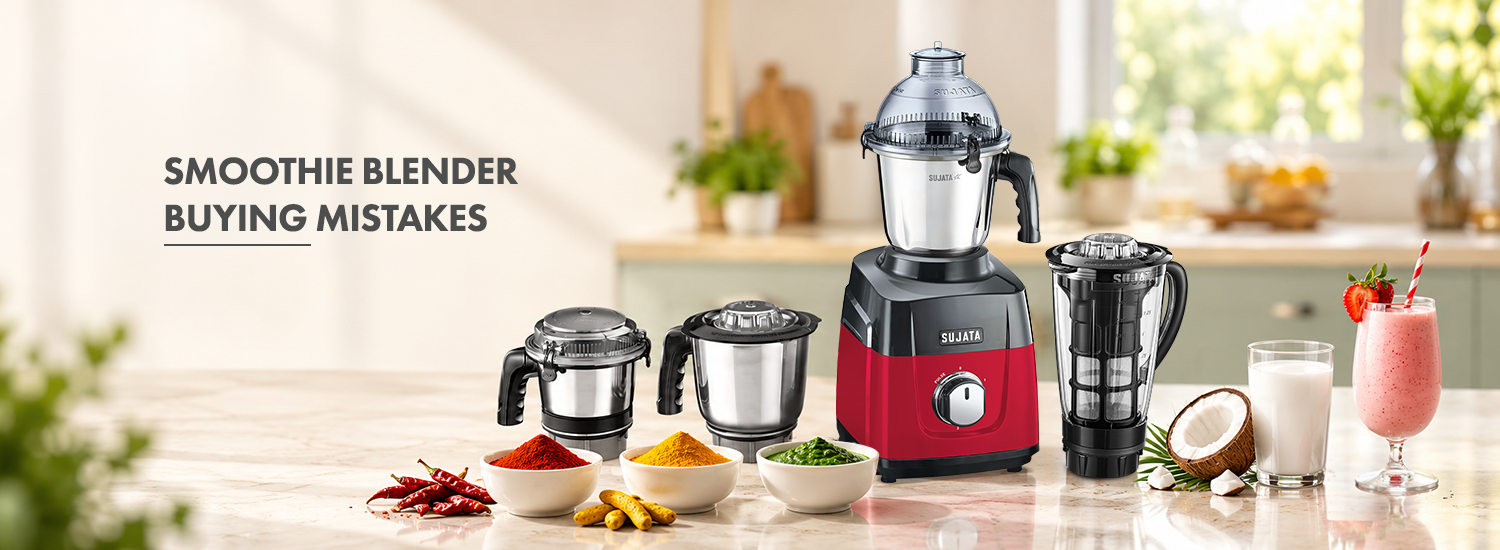
A smoothie is a simple way to enjoy fruits, vegetables, milk, yoghurt and other ingredients in one drink. However, getting the right consistency depends on more than just the ingredients you use. The blender you choose also plays an important role. A model with unsuitable motor power, limited capacity or poor-quality blades may struggle with thick mixtures and make everyday blending less convenient.
If you are planning to buy a blender, it helps to understand what to check before making a decision. This guide covers common mistakes to avoid, important features to consider and how to choose a good blender for smoothies that suits your everyday kitchen needs.
Why Choosing the Right Smoothie Blender Matters
A suitable blender can make preparing smoothies, shakes and other blended drinks easier. It should handle the ingredients you commonly use and provide a consistent texture without requiring too much effort. For example, blending a banana with milk is different from blending fibrous fruits, leafy vegetables, seeds or thicker mixtures. Your appliance should be suitable for the ingredients you plan to blend regularly.
Choosing the right model can also save time during busy mornings and make cleaning and storage more convenient. Instead of selecting an appliance based only on its appearance or price, consider its motor power, blade material, jar design and ease of use. These details can help you find a blender that fits your routine and offers practical value over time.
Common Mistakes to Avoid When Buying a Smoothie Blender
Choosing the Wrong Motor Power
Motor power is one of the first things to check when buying a blender. A motor that is not suited to your regular blending tasks may struggle with thick mixtures or fibrous ingredients. At the same time, choosing a high-powered model without considering your actual needs may mean paying for more capacity than you use.
Think about the smoothies you prepare most often. If you mainly blend soft fruits with milk or yoghurt, your requirements may differ from those of someone who regularly uses seeds, fibrous vegetables or thicker ingredients. Check the manufacturer’s specifications and choose a model designed for your intended use.
For example, Sujata offers mixer blenders with different motor ratings. Its NUTROMATIC has a 600W motor and operates at 19,000 RPM, while the FROOTMIX and MEGAMIX feature 900W double ball-bearing motors with a listed speed of 22,000 RPM. These specifications provide a useful starting point when comparing models.
Ignoring Jar Capacity
Jar capacity affects how much you can blend in one batch. A smaller jar may be convenient when preparing a drink for one person, but it may require multiple batches if you regularly make smoothies for your family. A larger jar can be more practical for preparing several servings together.
Before buying, think about the number of people you usually prepare drinks for and the amount you make at one time. Also consider the ingredients you use, as thick mixtures may need enough room to move around during blending. Avoid filling the jar beyond the manufacturer’s recommended limit.
Sujata’s MEGAMIX comes with a 3-litre jar and a tap mechanism for dispensing blends. If capacity is an important factor in your decision, check the listed jar size of each model and compare it with your daily requirements.
Overlooking Blade Quality
Blades play an important role in breaking down ingredients and achieving a consistent texture. Poorly suited or low-quality blades may make blending less effective, especially when you regularly use ingredients that are harder to process.
Check the blade material and the manufacturer’s guidance on suitable ingredients. Durable food-grade steel blades, such as those listed for Sujata’s NUTROMATIC, are worth considering when comparing options. Also look at the overall jar and blade design instead of focusing on motor power alone.
Remember that a blender’s performance depends on several factors working together. Suitable motor power, blade design, ingredient quantity and the right amount of liquid can all affect the result.
Focusing Only on Price
Price is an important consideration, but it should not be the only factor guiding your purchase. A low-cost model may appear attractive at first, but it may not offer the capacity, construction or features you need for regular use. On the other hand, the most expensive model may include features that do not make much difference to your routine.
Compare the specifications of different models within your budget. Look at motor power, blade material, jar construction, controls and the type of blending each appliance is designed to handle. Also check the warranty and available service support before deciding.
Not Considering Cleaning and Maintenance
Cleaning is easy to overlook when comparing appliances, but it becomes important when you make smoothies frequently. Fruit pulp, yoghurt and other ingredients can stick to the jar and around the blade assembly if the appliance is not cleaned promptly.
Look for a design that is easy to rinse and maintain. Check the manufacturer’s cleaning instructions, including whether any components can be removed and how the blade area should be cleaned safely. Never handle sharp blades carelessly, and do not immerse the motor unit in water.
A quick rinse after use, followed by proper cleaning, can help prevent residue from building up. Consider the space required to store the jar and other parts as well, particularly if your kitchen has limited counter or cupboard space.
Features to Look for in a Smoothie Blender
Once you understand the common buying mistakes, compare the features that will matter most in everyday use. A good blender should offer a balance of performance, convenience and durability.
- Suitable motor power: Choose a motor rating that matches the ingredients and quantities you usually blend.
- Appropriate jar capacity: Make sure the jar can accommodate your usual serving size without overfilling.
- Durable blades: Check the blade material and whether the design suits your intended ingredients.
- Useful controls: Simple speed or pulse controls can help you manage the blending process.
- Sturdy construction: Look for a well-built jar and a stable base suited to regular use.
- Easy maintenance: Check the cleaning instructions and how conveniently the appliance can be assembled and stored.
When comparing a blender for smoothies, remember that no single specification guarantees the perfect result. The combination of motor performance, blade design, ingredients and correct operation makes a difference.
Choosing the Right Blender for Your Kitchen
Explore Sujata Blenders
Sujata Appliances offers mixer blenders designed for different blending needs. Its range includes NUTROMATIC, FROOTMIX and MEGAMIX, each with different specifications and features.
| Features | NUTROMATIC | FROOTMIX | MEGAMIX |
| Motor Power | 600W | 900W | 900W |
| Motor Type | Check official product specifications | Double ball-bearing motor | Double ball-bearing motor |
| Speed | 19,000 RPM | 22,000 RPM | 22,000 RPM |
| Blade | Food-grade steel blade | Check official product specifications | Check official product specifications |
| Jar Features | Check official product specifications | Unbreakable transparent blender jar with aluminium base | 3-litre jar with tap mechanism |
| Additional Features | Pulse button | Check official product specifications | Tap mechanism for dispensing blends |
These models offer different features to consider based on your blending routine. The NUTROMATIC has a 600W motor, a pulse button and a food-grade steel blade. The FROOTMIX combines a 900W double ball-bearing motor with an unbreakable transparent blender jar and an aluminium base. The MEGAMIX also features a 900W double ball-bearing motor and comes with a 3-litre jar with a tap mechanism for dispensing blends.
Before making a purchase, review the complete specifications on Sujata Appliances’ official mixer blender page to confirm the features that matter most to you.
Consider Your Everyday Blending Needs
Your daily routine should guide your choice. If you prepare a single fruit smoothie before work, you may prioritise straightforward controls and easy cleaning. If you make drinks for several family members, jar capacity and motor performance may become more important.
Also think about the other blending tasks you expect the appliance to handle. You might want to prepare milkshakes, dips or blended soups in addition to smoothies. Check the manufacturer’s recommended uses for your chosen model instead of assuming every blender can handle every ingredient or task.
If you plan to buy a smoothie maker, compare the available specifications carefully and consider how frequently you will use it. When shopping for a smoothie blender online, read the product details rather than relying only on photographs, promotional descriptions or price.
How to Get Better Results From Your Blender
Choosing the right appliance is only one part of preparing a smooth drink. How you load and operate the blender also matters. Start by adding the liquid and softer ingredients, followed by the remaining ingredients, unless the manufacturer’s instructions recommend a different order. This can help ingredients move more easily around the jar.
Cut large fruits into smaller pieces and remove inedible parts before blending. Add liquid gradually if the mixture is too thick, and use the pulse function when appropriate to help move ingredients around. Avoid overfilling the jar, and allow the motor to rest as directed in the user manual.
For frozen or particularly hard ingredients, check that your model is designed to handle them before adding them. Never force the blender to process ingredients beyond its stated capabilities. Once you finish, clean the jar and other washable parts according to the manufacturer’s instructions.
These simple habits can help you achieve a more consistent texture while using your appliance correctly.
FAQs
What motor power is best for smoothies?
The right motor power depends on the ingredients you blend and how frequently you use the appliance. Soft fruits and liquids may need less power than thick mixtures or fibrous ingredients. Sujata’s range includes the 600W NUTROMATIC and the 900W FROOTMIX and MEGAMIX, giving you different specifications to compare. Check the manufacturer’s recommendations before choosing a model.
What size blender jar should I choose?
Choose a jar based on the number of servings you usually prepare. A smaller capacity may work for individual drinks, while a larger jar can be more convenient for families or multiple servings. Sujata’s MEGAMIX features a 3-litre jar. For other models, review the official specifications to confirm the capacity before purchasing.
How do I choose a good smoothie blender?
Start by checking motor power, jar capacity, blade material, construction and ease of cleaning. Then consider your budget, how often you will use the appliance and the ingredients you plan to blend. Comparing these factors will help you choose a model that suits your everyday requirements rather than relying on price or appearance alone.