
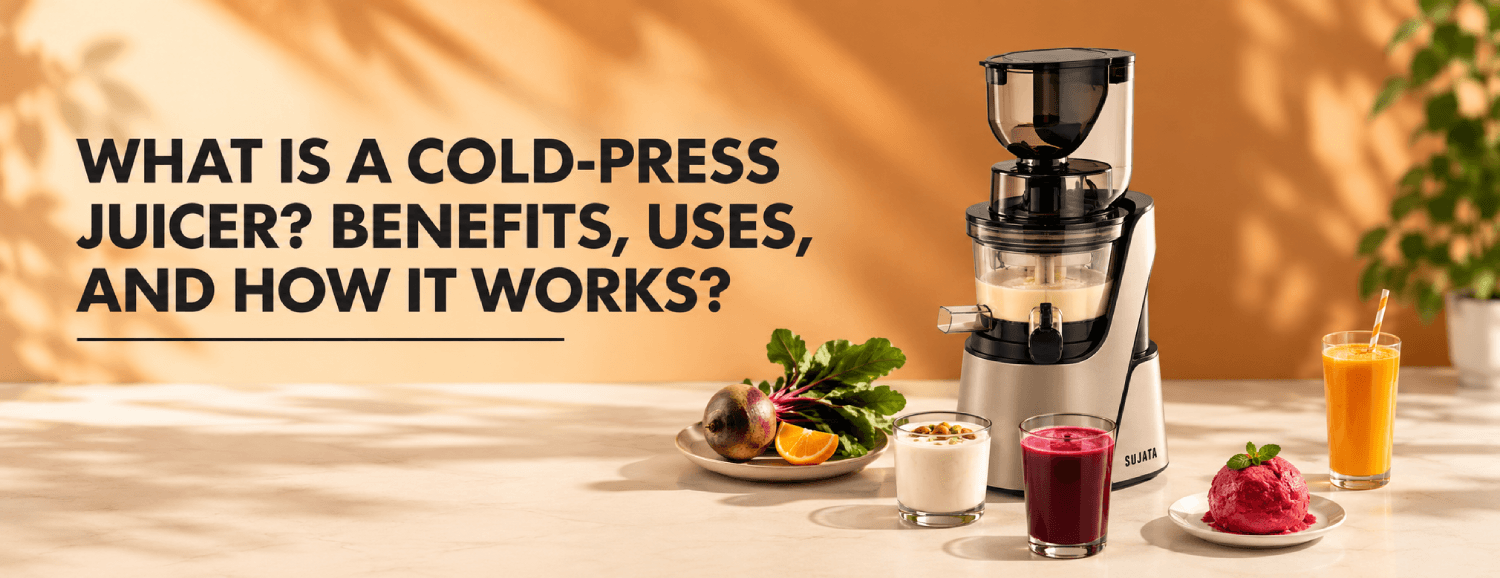
Fresh juice is a simple way to add variety to your daily routine. From apple and carrot juice to refreshing cucumber and green vegetable blends, homemade juice lets you choose the ingredients and adjust the taste to your preference. However, the type of juicer you use can affect how the juice is extracted, its texture and the time required to prepare it. This is where a cold press juicer becomes a useful addition to the kitchen.
Unlike conventional high-speed juicers, a cold press model uses a slow crushing and pressing mechanism to extract liquid from fruits and vegetables. This process produces juice with less heat and generally less foam, depending on the ingredients and machine. If you are considering buying one, this cold press jucier guide explains how the appliance works, its everyday uses, the benefits it offers and what to look for when choosing a model for your home.
What Is a Cold-Press Juicer?
A cold press juicer is a kitchen appliance that extracts juice by slowly crushing and pressing fruits and vegetables. It is also commonly called a slow juicer or a masticating juicer. Instead of relying on fast-spinning blades to shred produce, it uses a rotating component called an auger to press ingredients and release their juice.
The extracted liquid passes through a strainer, which separates much of the pulp from the juice. The juice is collected in one container, while the remaining pulp is directed into another. Depending on the strainer and the ingredients used, the final juice can be smooth or contain some pulp.
Cold pressing produces less heat through friction than many high-speed juicing methods. It can also reduce the amount of air mixed into the juice during extraction. These factors may help preserve the natural colour and flavour of the ingredients. However, the nutritional content still depends on the produce, preparation and storage, and fresh juice is best enjoyed soon after preparation.
How Does a Cold-Press Juicer Work?
Understanding how the appliance works makes it easier to use it correctly and choose the right model for your kitchen.
1. Fruits and Vegetables Enter the Feeding Chute
First, washed fruits and vegetables are placed into the feeding chute. Depending on the size of the chute and the ingredients, some produce may need to be cut into smaller pieces. Removing hard, inedible parts and following the manufacturer’s preparation instructions helps the appliance process ingredients more smoothly.
2. The Auger Slowly Crushes the Ingredients
Inside the juicing chamber, the auger rotates slowly and crushes the produce against the chamber walls. This action breaks down the ingredients and presses out their liquid. The slow movement helps limit heat generated through friction compared with many high-speed juicers.
3. The Strainer Separates Juice and Pulp
The crushed ingredients move through a straining system that separates the liquid from much of the fibrous pulp. The juice flows into the collection container, while the pulp exits through a separate outlet. The type of strainer used determines how much pulp remains in the finished drink.
4. The Juice Is Collected for Serving
Once extraction is complete, the fresh juice is ready to serve. You can drink it on its own or combine different fruits and vegetables to create your preferred flavour. Cleaning the juicer soon after use also helps prevent pulp from drying on its components.
What Are the Benefits of Using a Cold-Press Juicer?
A cold press juicer offers several practical advantages for people who enjoy preparing fresh juice at home. The most useful benefits relate to its extraction method, control over ingredients and versatility.
1. Helps Preserve Natural Flavour
The slow pressing process limits heat generation during extraction. This can help retain the natural flavour and colour of fruits and vegetables. As a result, freshly prepared juice can taste different from juice made using a high-speed method, although the final flavour depends on the ingredients and their freshness.
2. Gives You More Control Over Ingredients
Preparing juice at home lets you decide which fruits and vegetables to use. You can combine ingredients based on your taste, avoid adding sugar if you prefer and skip unnecessary flavourings. This can be helpful when you want to reduce your reliance on packaged drinks with added sugar.
3. Offers Different Texture Options
The strainer plays an important role in determining the consistency of the juice. Some models include different strainers for clear juice, thicker blends and other preparations. This flexibility is useful for households where different family members prefer different textures.
4. Supports a Varied Diet
Fresh juice can be one way to include a variety of fruits and vegetables in your routine. Ingredients such as carrots, apples, cucumber, beetroot and leafy greens can be combined to create different flavours. However, juice should complement a balanced diet rather than replace whole fruits and vegetables regularly, as juicing removes much of the fibre.
5. Can Be Used for More Than Regular Juice
Some models come with additional attachments that expand their uses beyond extracting juice. Depending on the design, these attachments may help prepare smoothies, thicker blends, nut-based drinks or frozen fruit desserts. Check the features of the specific model before choosing it for these purposes.
What Can You Make with a Cold-Press Juicer?
One of the advantages of this appliance is that you can experiment with different ingredient combinations. Here are a few ideas for everyday use.
- Apple and carrot juice: Combine apples and carrots for a naturally sweet drink. Adjust the ratio to suit your taste.
- Cucumber and mint juice: Use cucumber with a little mint for a light, refreshing drink.
- Beetroot and carrot juice: Combine beetroot and carrots for an earthy flavour with natural sweetness.
- Green vegetable juice: Try suitable leafy greens with cucumber or apple to balance the flavour.
- Citrus and ginger juice: Combine prepared citrus fruit with a small amount of ginger for a sharper taste. Follow the juicer’s instructions for peeling and removing seeds.
- Nut-based drinks: Some cold press models support nut milk preparation using a suitable strainer or attachment. Follow the manufacturer’s instructions for soaking, preparing and processing the ingredients.
Always wash produce thoroughly and prepare it according to the appliance’s instructions. Avoid forcing ingredients into the chute or overloading the machine.
Cold-Press Juicer vs Regular Juicer
Both types of appliances extract juice from fruits and vegetables, but they use different methods. Understanding these differences can help you decide which one suits your routine.
| Feature | Cold-Press Juicer | Conventional High-Speed Juicer |
| Extraction method | Slowly crushes and presses produce | Uses fast-spinning blades and centrifugal force |
| Operating speed | Generally slower | Generally faster |
| Heat and air exposure | Usually limits heat and air mixing during extraction | May introduce more air and generate more heat |
| Juice texture | Depends on the strainer and ingredients; often less foamy | May produce more foam, depending on the model and produce |
| Preparation time | Can take longer to extract juice | Often processes ingredients more quickly |
| Cleaning | Requires cleaning the juicing chamber, strainer and other removable parts | Cleaning requirements depend on the design and components |
Neither type is the right choice for every household. A high-speed model may suit people who prioritise quick preparation, while a cold press model may appeal to those who prefer slow extraction and additional strainer options. Consider your daily routine, cleaning preferences and the kinds of ingredients you plan to juice before making a decision.
Explore the Sujata Cold Press Slow Juicer SJ01
For households looking for a versatile juicer, the Sujata Cold Press Slow Juicer SJ01 combines slow-speed extraction with multiple strainer options. It is designed for preparing fresh juice as well as selected thicker blends and frozen fruit desserts using the appropriate attachments.
The SJ01 operates at 40 RPM and features a 250W AC motor. Its slow-speed mechanism is designed to minimise oxidation and reduce friction during extraction. The model also includes dual feeding chutes, a reverse function and a magnetic safety lock.
| Feature | Sujata Cold Press Slow Juicer SJ01 |
| Model | SJ01 3-in-1 Cold Press Slow Juicer |
| Motor | 250W AC motor |
| Operating speed | 40 RPM |
| Feeding chutes | Two sizes: 81 mm and 41 mm |
| Fine strainer | For smooth, pulp-free juice and suitable nut milks |
| Coarse strainer | For smoothies, shakes and thicker blends |
| Blank strainer | For frozen fruit desserts |
| Reverse function | Helps clear ingredients stuck in the auger |
| Safety feature | Magnetic safety lock |
| Noise | Designed for quiet operation |
| Included accessories | Juice and pulp containers, food pusher, auger, spinning basket, strainers and cleaning brush |
The different strainers make the SJ01 useful for more than one type of preparation. Use the fine strainer when you prefer smooth juice, the coarse strainer for thicker blends and the blank strainer for compatible frozen fruit desserts. The dual feeding chutes provide flexibility when adding different ingredients, while the reverse function helps when produce becomes stuck during processing.
The model is made from BPA-free, food-grade plastic, according to Sujata’s product information. For the best experience, assemble it correctly, use the appropriate strainer and follow the operating and cleaning instructions supplied with the appliance.
Explore the Sujata Cold Press Slow Juicer SJ01 to learn more about its features and specifications.
How to Maintain Your Cold-Press Juicer
Regular cleaning is important for hygiene and for keeping the appliance in good working condition. Fruit pulp can dry on the strainer and other parts if it is left for too long, making it harder to remove later.
Follow these simple maintenance steps:
- Switch off and unplug the appliance: Disconnect it from the power supply before disassembling or cleaning it.
- Remove the juice and pulp containers: Empty both containers and dispose of the pulp appropriately.
- Disassemble the removable parts: Follow the instructions in the user manual to remove the strainer, auger and other components safely.
- Clean away the pulp: Use the supplied cleaning brush to remove residue from the strainer and other parts. Wash components only as directed by the manufacturer.
- Allow parts to dry: Let cleaned components dry thoroughly before reassembling the juicer.
- Store the appliance properly: Keep it in a clean, dry place and check that all components are correctly fitted before the next use.
Never immerse the motor base in water or attempt to clean the appliance while it is plugged in. Avoid using sharp objects to remove dried pulp, as they may damage the strainer or other components.
Conclusion
A cold press juicer extracts juice by slowly crushing and pressing fruits and vegetables instead of relying on fast-spinning blades. This method can help limit heat and air exposure during extraction, while giving you control over the ingredients and consistency of your homemade drinks. With the right attachments, some models can also prepare thicker blends and frozen fruit desserts.
Before buying one, consider the operating speed, feeding chute, strainer options, safety features and cleaning requirements. The Sujata Cold Press Slow Juicer SJ01 offers 40 RPM operation, dual feeding chutes, three strainers and a reverse function, making it a versatile option for different home preparations. Choosing a model that suits your routine and maintaining it properly can make fresh food preparation more convenient.
FAQs
1. What is a cold-press juicer used for?
It is used to extract juice from fruits and vegetables through slow crushing and pressing. Some models also support thicker blends, nut milks or frozen fruit desserts with suitable attachments.
2. Is a cold-press juicer better than a regular juicer?
It depends on your needs. Cold press models operate more slowly and generally limit heat and air exposure, while high-speed juicers often prepare juice faster.
3. Can a cold-press juicer make smoothies?
Some models can prepare thicker blends when fitted with a suitable strainer. The Sujata SJ01 includes a coarse strainer designed for smoothies and shakes.
4. How do you clean a cold-press juicer?
Unplug the appliance, disassemble its removable parts as instructed and clean away pulp using the supplied brush. Follow the manual for washing and drying each component.
5. Does cold-pressed juice need to be refrigerated?
Yes. Fresh juice should be refrigerated promptly in a clean, covered container if it is not consumed immediately. For the best quality, prepare only what you plan to drink and follow safe food-storage practices.