
A mixer grinder is a useful appliance for everyday Indian cooking. From grinding spices and preparing masalas to making chutneys and pastes, it helps you complete many kitchen tasks with less effort. However, getting the right texture depends not only on the motor but also on how you use its speed settings.
Using a low speed, a higher speed or a pulse function at the right time can help you control the grinding process. It can also make it easier to achieve the consistency you want without running the appliance longer than necessary.
Understanding mixer grinder speed settings is particularly useful when you work with different ingredients. In this guide, we explain what the different speeds do, how to select the right setting for common ingredients and how to use your mixer grinder more effectively.
Why Mixer Grinder Speed Settings Matter
Different ingredients need different amounts of processing. For example, you may want a coarse texture when crushing certain spices, but a finer texture when preparing masala powder. Similarly, making a paste requires a different approach from grinding dry ingredients.
Using the right mixer grinder speed gives you better control over the process. Starting slowly can help you manage ingredients at the beginning, while increasing the speed can help break them down further. The pulse function, when available, allows short bursts of operation for greater control.
Speed settings also help you adjust the grinding process according to the quantity and type of ingredients. However, the correct setting depends on your appliance, jar and recipe. Always follow the manufacturer’s instructions rather than assuming that one speed works for every task.
Understanding Different Mixer Grinder Speed Settings
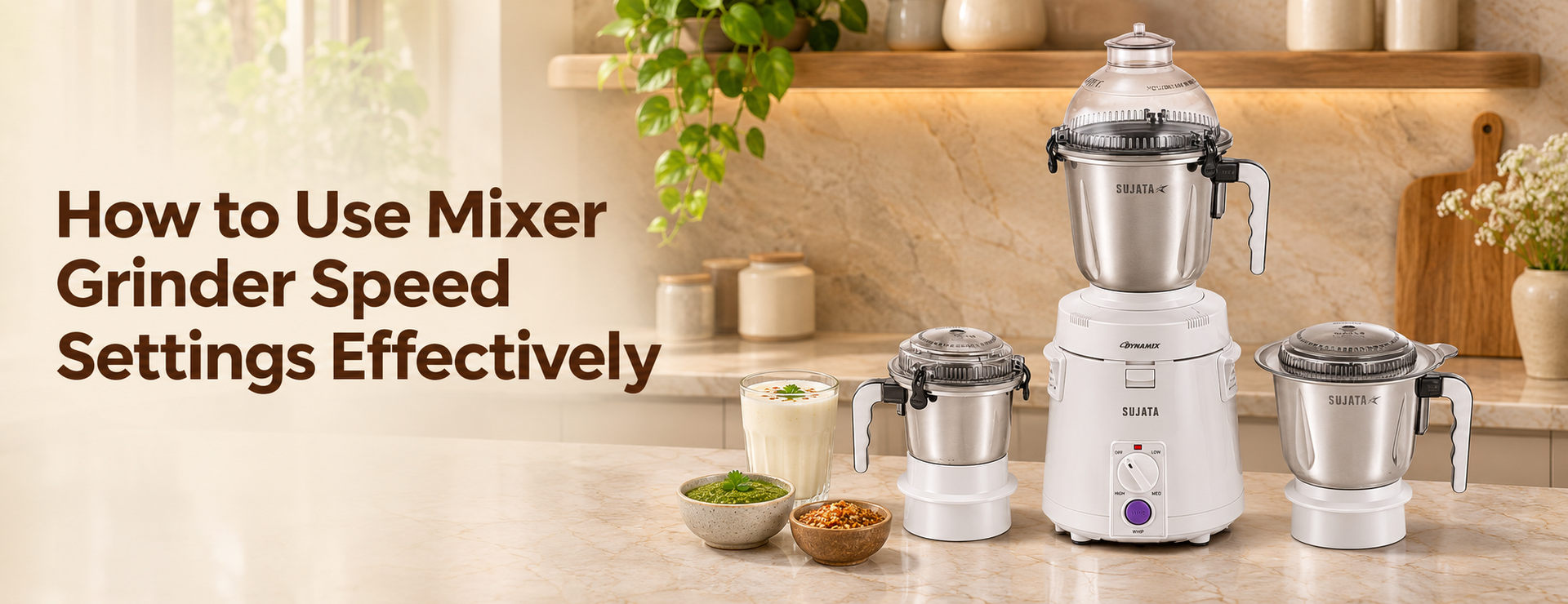
Many mixer grinders have a rotary switch with multiple speed options. Sujata Appliances’ MG01, MG02 and MG03 models feature a three-speed rotary switch with pulse action. The SUPERMIX and DYNAMIX models also offer three-speed rotary control and a whipper button for momentary operation.
Although the exact controls can vary by model, the basic idea is to adjust the speed according to the ingredients and the texture you want.
Low Speed for Controlled Grinding
Low speed is useful when you want to begin processing ingredients gradually. It can help you control the initial movement of ingredients and reduce splashing when working with suitable wet mixtures.
For example, when preparing a paste, you can begin at a lower setting and check how the ingredients are moving inside the jar. If the mixture needs further processing, increase the speed gradually as recommended for your appliance.
A lower setting may also be useful when you want more control over the texture instead of immediately breaking down everything at maximum speed. However, not every ingredient can be processed effectively at low speed, so refer to your model’s instructions.
Medium Speed for Everyday Grinding
Medium speed can be a useful starting point for many routine grinding tasks, depending on the appliance and ingredients. It offers a balance between controlled processing and faster blade movement.
You can use an appropriate medium setting for tasks such as preparing certain chutneys, grinding softer ingredients or processing mixtures that do not require maximum speed. Check the consistency as you work and adjust the setting if needed.
Remember that the ideal setting depends on the quantity, moisture level and hardness of the ingredients. If the motor struggles or the mixture does not move properly, stop the appliance and check the jar contents instead of continuing to run it under strain.
High Speed for Fine Grinding
High speed can help process suitable ingredients more quickly and achieve a finer consistency. It is useful for tasks that require more extensive grinding, such as preparing fine spice powders or processing ingredients into a smooth paste, provided the jar and appliance are designed for that task.
Start with the recommended setting and increase the speed when needed. Check the texture between short processing intervals so you do not grind ingredients for longer than necessary.
High speed is not always the best option. Some recipes call for a coarse texture, and running the appliance at maximum speed may process the ingredients more finely than you want. The goal is to choose the setting that matches the result you need.
How to Choose the Right Speed for Different Ingredients
The right mixer grinder speed settings depend on what you are processing. Use the following guidance as a starting point and follow the instructions provided with your model.
Spices and Dry Ingredients
Spices such as cumin, coriander seeds and peppercorns are commonly ground to prepare fresh masalas. The required texture may range from coarse to fine, depending on the dish.
For a coarse grind, use short pulses if your appliance has this function. For a finer powder, use the recommended grinding speed and check the texture at intervals. Avoid overfilling the jar, as this can make it harder for the ingredients to move evenly around the blades.
A suitable dry-grinding jar is important for this task. Sujata’s MG01, for example, includes a 1-litre stainless-steel dry grinding jar intended for ingredients such as spices, pulses and cereals. Always check the product instructions before processing particularly hard ingredients.
Pulses and Grains
Pulses and grains are used in many Indian recipes, from everyday cooking preparations and various batters. The right speed depends on whether you need a coarse powder, a finer grind or a wet mixture.
For dry grinding, use a jar designed for dry ingredients and process manageable quantities. If you are preparing a wet mixture, follow the recipe and your appliance’s instructions for adding liquid and selecting the appropriate setting.
Avoid assuming that every pulse or grain can be processed in the same way. Some ingredients may need soaking, smaller batches or a particular jar configuration. If you are unsure, consult the product manual before starting.
Nuts and Seeds
Nuts and seeds can be used in chutneys, spice blends and other recipes, but their texture can change quickly during grinding. Depending on the ingredient and the amount of processing, you may get a coarse mixture or a finer consistency.
If your model supports pulse operation, use short pulses when you want more control over the texture. Check the mixture between intervals and avoid running the appliance continuously for longer than recommended.
Some nuts release oil as they are ground, which can cause the mixture to become pasty. For this reason, it is useful to stop and check the texture rather than relying only on the speed setting. Confirm that your mixer grinder is suitable for the specific ingredients you plan to process.
Tips for Using Mixer Grinder Speed Settings Effectively
A few simple habits can help you make better use of your appliance and improve your grinding results.
- Start with the recommended setting: Follow the user manual for the ingredient and task you are handling.
- Increase speed gradually: If the ingredients need more processing, move to a higher setting when appropriate.
- Use pulse action for control: Short bursts can help achieve a coarse texture or process small quantities more carefully.
- Choose the correct jar: Use a jar designed for the ingredient and the quantity you want to prepare.
- Avoid overfilling: Leave enough room for ingredients to move around and follow the recommended capacity.
- Check the texture regularly: Stop the appliance before opening the lid to inspect the ingredients.
- Follow operating-time limits: Give the motor breaks as directed by the manufacturer.
- Keep the appliance clean: Remove food residue after use and dry the jars before storing them.
These habits make mixer grinder speed control more practical because they help you focus on the consistency you want instead of simply choosing the highest setting.
Explore Sujata Mixer Grinders for Efficient Grinding
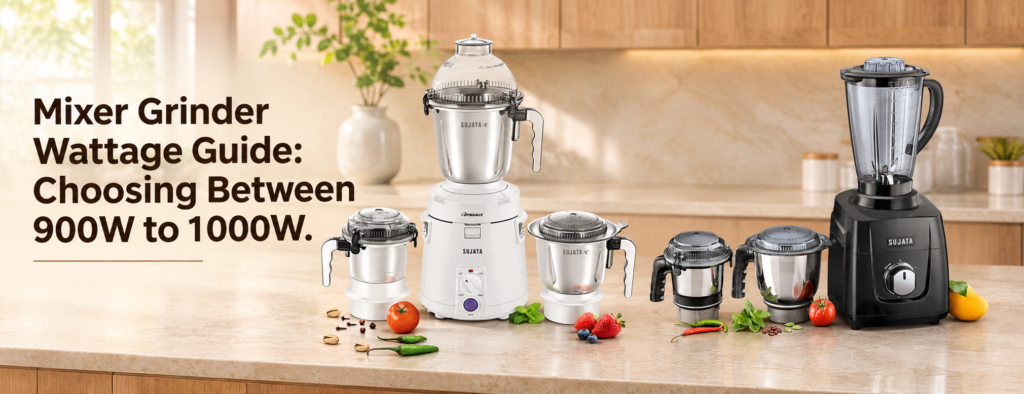
Sujata Appliances offers mixer grinders with different motor ratings, jar configurations and speed controls to suit everyday Indian cooking requirements. Its range includes 900W models such as DYNAMIX and SUPERMIX, as well as 1000W models such as MG01, MG02 and MG03.
The following models provide examples of the available specifications:
| Model | Motor Power | Listed Maximum No-Load Speed | Speed Controls |
| MG01 | 1000W | 25,000 RPM | Three-speed rotary switch with pulse action |
| MG02 | 1000W | 25,000 RPM | Three-speed rotary switch with pulse action |
| MG03 | 1000W | 25,000 RPM | Three-speed rotary switch with pulse action |
| DYNAMIX | 900W | Approximately 22,000 RPM | Three-speed rotary switch with whipper button |
| SUPERMIX | 900W | Approximately 22,000 RPM | Three-speed rotary switch with whipper button |
These figures describe the listed maximum no-load speeds; they do not guarantee that the motor maintains the same speed under every grinding condition. Actual performance depends on the ingredients, quantity and operating conditions. The specific controls and jar configurations should also be checked on each model’s product page.
When choosing the best mixer grinder for your kitchen, consider the ingredients you grind regularly, the jar sizes you need and the controls available. A higher motor rating or maximum RPM alone does not determine which appliance is right for you.
If you are comparing the best 750-watt mixer grinders with higher-powered models, look at the full specifications and intended uses rather than comparing wattage alone. Also check the jar configuration, safety features, operating instructions and after-sales support. Sujata’s 900W and 1000W options provide different specifications to consider for everyday grinding.
A good choice depends on how well the appliance matches your cooking routine. Comparing these factors is more useful than assuming that a particular mixer grinder brand or speed setting is automatically suitable for every household.
FAQs
Which speed is best for grinding spices?
The right speed depends on the spices and the texture you want. Use short pulses for a coarse grind when your appliance supports them and follow the recommended setting for a finer powder. Avoid overfilling the dry-grinding jar and check the consistency between processing intervals.
Is high speed always better for grinding?
No. High speed can help break down suitable ingredients more quickly, but it may produce a finer texture than you need. Lower speeds or pulse action can provide better control for certain tasks. Choose the setting according to the ingredient, jar and desired result.
Can speed settings affect grinding consistency?
Yes. Speed settings influence how quickly and how extensively ingredients are processed. Using a suitable setting, the correct jar and manageable quantities can help you achieve the desired consistency. Blade design, ingredient preparation and the amount of liquid also affect the result.