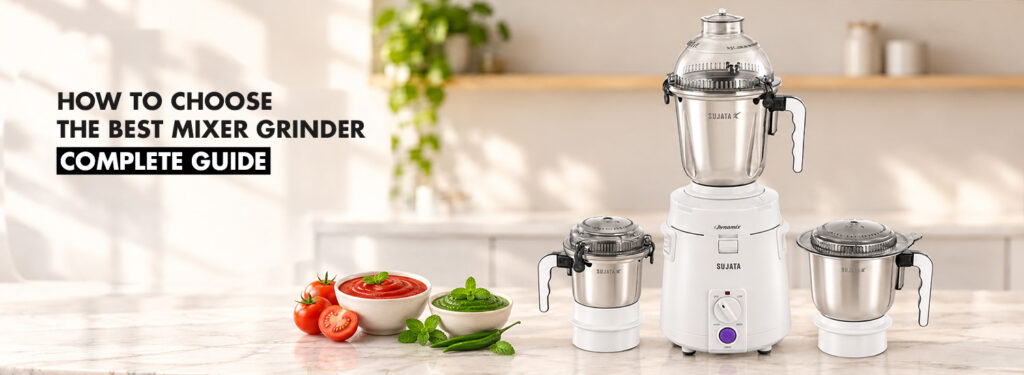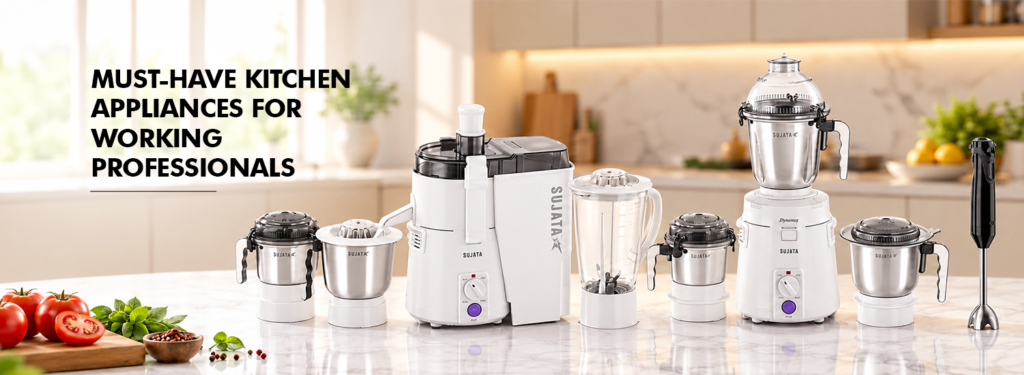

What separates a mixer grinder that lasts a decade from one that struggles through its second year? Certainly not its price, nor even the number of accessories included in it. It is all about engineering quality, the design of the motor, the accuracy of the mixer blades, the grinder jar design, and if the type of jars provided fits Indian cuisine needs. If you are looking for the best mixer grinder in India and want to move beyond claims to decisions grounded in what genuinely matters, this guide covers everything you need to know before you buy.
1. Start With the Motor — Everything Else Follows
Every quality specification in a mixer grinder, fine grinding, quick blending, lump-free batters, traces back to one thing: the motor. Mixer grinder motors determine how much work the appliance can do, how long it will last, and how consistently it performs over years of daily use.
When evaluating motors, look for three things:
- Wattage: Higher wattage means more processing power. A motor in the 900W–1000W range delivers without straining the mechanism.
- RPM (Rotations Per Minute): RPM determines how quickly and finely ingredients are processed. Higher RPM produces smoother, more consistent results, a critical requirement when grinding dry masalas or wet batters for dosas and idlis.
- Motor Construction: The internal engineering of a motor determines its real-world durability. A double ball-bearing motor reduces internal friction. It translates directly into cooler running temperatures, lower wear on components, and a significantly longer operational life.
2. Understanding Mixer Blades: The Cutting Edge of Performance
The motor provides the power; the mixer blades determine how that power is applied to your ingredients. Blade design governs whether you get a coarse grind or a silky-smooth paste, a chunky mix or a completely homogeneous blend.
Key Blade Characteristics to Assess
- Grade and Hardness of Blades: Food-grade stainless steel blades stay sharp. Check for hardened, precision-ground blades that hold their geometry after daily use.
- Shape of Blades: The right blade shape depends on its intended purpose. Blade assemblies with multi-angle edges and multiple edges deal with a wide variety of ingredients, spices, wet chutney, batters, and hard substances, requiring no adjustment on the user’s part.
- Stable Fit and Reduced Vibration: Well-engineered blades fitted into a grinder jar should be able to rotate smoothly at high RPM without vibrating excessively, which means that efficient processing takes place inside the jar.
3. Grinder Jar and Types of Jars: Matching Jar to Task
No single jar does everything well. A machine supplied with the right combination of types of jars gives you far more cooking flexibility than one with a single general-purpose grinder jar. Here is a practical breakdown of the jar types you should look for and what each does best.
| Jar Type | Ideal For | Typical Capacity |
| Dry Grinding Jar | Spice powders, coffee beans, dry grains, sugar | Small: 0.5 litre |
| Wet Grinding Jar | Idli / dosa batter, chutneys, wet masala pastes | Medium: 1 litres |
| Liquidising Jar | Smoothies, juices, soups, lassi, milkshakes | Large: 1.75 litres |
Grinder Jar Material and Build Quality
The grinder jar itself deserves scrutiny beyond just capacity. Look for:
- Built from food-grade stainless steel for increased longevity and hygiene, it does not stain, absorbs no odours, and is easy to clean after grinding highly pungent spices such as turmeric and pepper.
- It has an excellently crafted lid and gasket system that prevents spills even when grinding liquid-rich foods.
4. Build Quality and Longevity: Investing in Performance That Lasts
The Indian kitchen appliance is exposed to harsh working conditions: continuous usage, hard water, extreme heat, and a variety of foodstuffs from delicate herbs to tough lentils. However, an effective and efficient mixer grinder is described in its specs.
When assessing build quality, look beyond the surface finish:
- Motor Housing: Strong motor housing will shield the motor from heat and regular impacts. It should be constructed with a sturdy base that does not slide during operations.
- Overload Protection: Quality machines include thermal overload protection that automatically cuts power if the motor runs too hot, protecting both the appliance and the user.
- Jar Coupling and Drive System: The coupling between the jar and motor should be engineered to precise tolerances. Lose or poorly made couplings wear quickly and transfer less of the motor’s power to the blade.
- Warranty and Serviceability: A manufacturer that offers a meaningful warranty period and has a widespread service network is making a statement about confidence in their engineering.
5. Low Maintenance and Everyday Reliability
The value of a well-built appliance is not just in what it delivers when it is working, but also in how little attention it requires to keep working. A best mixer grinder in India should:
- Require only routine cleaning after use, no special tools, no disassembly beyond the jar.
- Be designed so that wear parts such as blades and gaskets are easy to identify, source, and replace when needed.
- Maintain consistent performance over its operational life, not gradually lose grinding quality as the motor or blades wear.
Pre-Purchase Checklist For Mixer Grinder
| What to Check | What to Look For |
| Mixer grinder motors | Double ball-bearing construction, adequate wattage, high RPM rating |
| Mixer blades | Hardened stainless steel, multi-angle configuration, secure jar fitting |
| Grinder jar quality | Food-grade stainless steel, strong gasket seal, stable base coupling |
| Types of jars supplied | Minimum three jars: dry grinding, wet grinding, and liquidising |
| Build and housing | Robust motor housing, overload protection, anti-skid base |
| Warranty and service | Meaningful warranty period, accessible service network |
| Long-term value | Low maintenance design, easily available wear parts, consistent performance |
Conclusion: Make an Informed, Long-Term Choice
Finding the best mixer grinders in India really boils down to determining what your mixer grinders should do and choosing one that will help you achieve that in an efficient and dependable way.
Find a machine that can withstand years of use, requires minimum maintenance, and comes from a company that has been proven to deliver. All three will ensure that the mixer grinders you choose are indeed worth the money.
Sujata has delivered on exactly that promise for generations of Indian households. It continues to do so today.
FAQs
1. Is overload protection necessary in a mixer grinder?
Yes, overload protection helps protect the motor if the appliance is overloaded during grinding. Sujata’s mixer grinder range includes built-in overload protection to support safe operation during demanding kitchen tasks. Always follow the recommended operating instructions to avoid overloading the appliance.
2. How do I choose a mixer grinder that lasts longer?
Look for a mixer grinder with a durable motor, sturdy jars, quality blades and reliable construction. Sujata MG01 features a 1000W motor with double ball bearings, high-tensile stainless steel blades and three jars for different food preparation tasks. These features make it worth considering for regular Indian cooking.
3. Which is the best mixer grinder in India for hard spices?
For hard spices such as turmeric, pepper and coriander seeds, look for a powerful motor, high rotational speed, durable blades and a suitable dry grinding jar. Sujata DYNAMIX features a 900W double ball-bearing motor, approximately 22,000 RPM and a 1-litre stainless steel dry grinding jar designed for grinding spices and other dry ingredients.