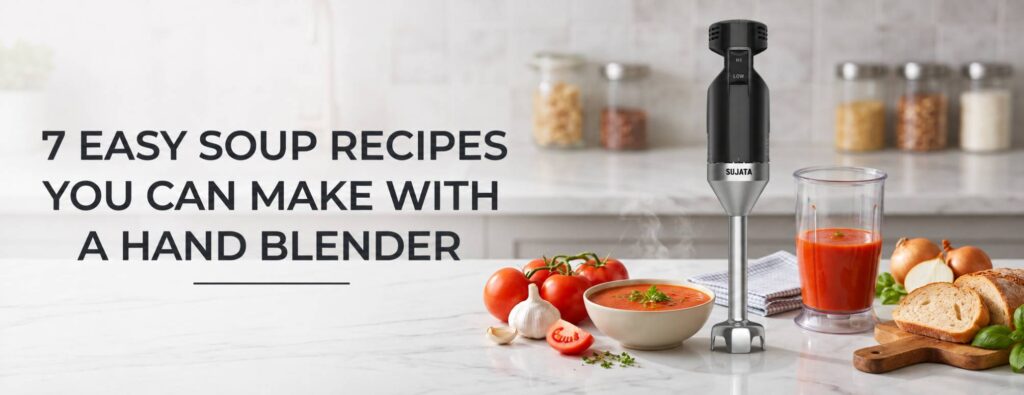

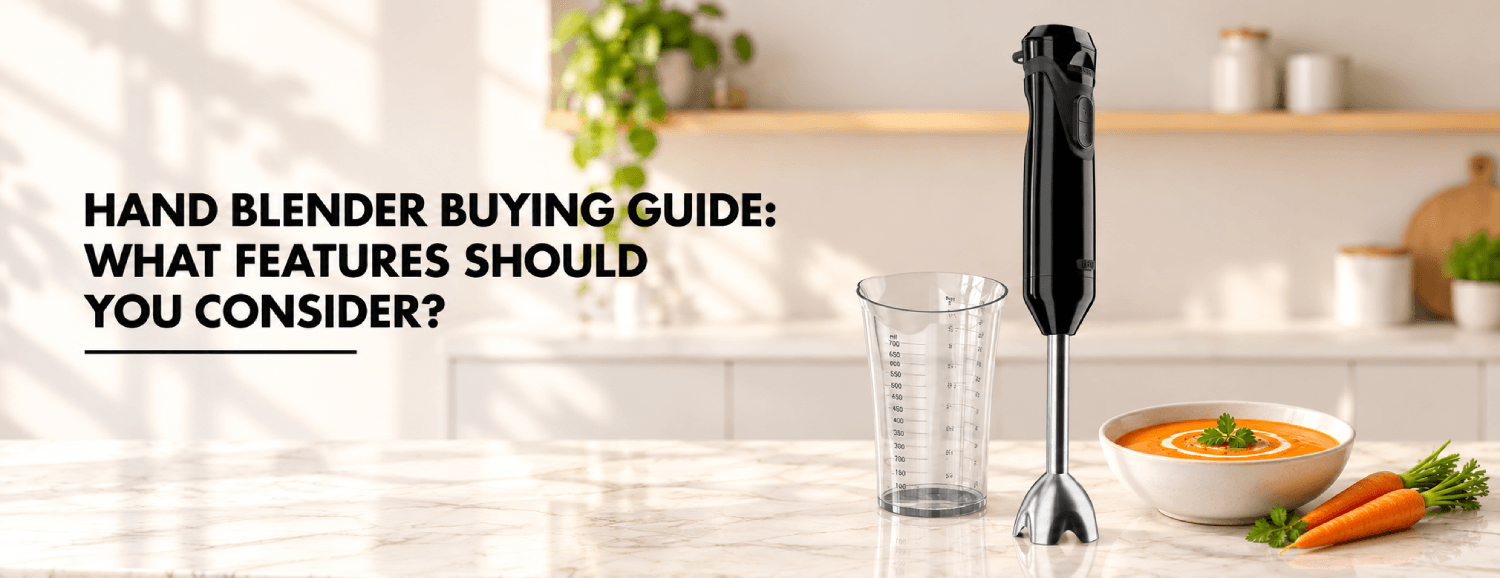
A hand blender can make everyday cooking easier by helping you blend ingredients directly in a bowl, saucepan or suitable container. From preparing smooth tomato gravies and creamy soups to blending fruit smoothies and purees, it can save time and reduce the need to transfer ingredients between different jars. Its compact design also makes it a practical addition to kitchens where storage space is limited.
However, choosing the right appliance involves more than comparing motor wattage or looking for the lowest price. Blade quality, speed controls, handling, cleaning requirements and the type of food you prepare all affect how useful a hand blender will be. This hand blender buying guide explains the important features to check, along with details of Sujata Appliances’ hand blender options, to help you make an informed decision.
What Should You Look for When Buying a Hand Blender?
Before choosing a model, consider how you plan to use it. A hand blender intended mainly for soups and purees may have different requirements from one used frequently for smoothies, sauces and other preparations. The following features can help you compare options more effectively.
1. Motor Power: Choose According to Your Needs
Motor power indicates how much electrical power the motor uses. It is an important specification, but it should be considered alongside the appliance’s design and intended use. A suitable motor should be able to handle the ingredients you regularly prepare without making everyday blending unnecessarily difficult.
When comparing hand blenders, consider:
- Everyday blending: Choose a model designed for soups, sauces, cooked vegetables and other suitable soft ingredients.
- Frequent use: Consider the motor specifications and recommended operating instructions if you expect to use the appliance regularly.
- Different recipes: Look at the complete product specifications.
- Manufacturer guidance: Check which ingredients and tasks the appliance is designed to handle.
Sujata offers two hand blender options with different motor ratings. The Blendstick Dual Speed features a 600W motor, while the BlendCraft Premium Hand Blender has a motor rated at 180W under maximum load. These specifications can help you compare the models, but the intended uses and other features should also influence your decision.
2. Speed Settings: Get Better Control Over Blending
Different recipes need different blending intensities. For example, you may want to start slowly when blending a thin soup to avoid splashing, then increase the speed to achieve a smoother consistency. Convenient speed controls allow you to adjust the blending process to suit the ingredients.
Here are the main points to consider:
- Multiple speed options: These give you more control over how quickly ingredients are processed.
- Easy-to-reach buttons: Convenient controls help you adjust the speed while holding the appliance.
- Simple operation: Clearly positioned controls make the blender easier to use during everyday cooking.
- Suitable blending technique: Starting at a lower speed can help reduce splashing, particularly with liquids.
Both the Sujata Blendstick Dual Speed and BlendCraft Premium Hand Blender offer two-speed controls. The Blendstick has a dual-speed operation, while the BlendCraft uses a two-speed toggle switch.
3. Blade Quality and Blending Shaft
The blades and blending shaft directly affect how the appliance handles ingredients. Durable blades are important for regular use, while a well-designed blending head can help you blend ingredients more comfortably in suitable containers.
When checking the blade and shaft design, look for:
Stainless steel blades: These are commonly used for durability and resistance to corrosion when properly maintained.
A suitable blending head: The design should support the type of blending tasks specified by the manufacturer.
A practical shaft length: The shaft should reach the ingredients in your usual bowls or containers.
Easy maintenance: Check whether the blending shaft can be detached and cleaned according to the instructions.
The Sujata Blendstick features a stainless-steel blending stick, while the BlendCraft has a food-grade metal stick with stainless steel blades. These details are useful when comparing their construction.
4. Attachments: Check What Is Included
Some hand blenders are designed mainly for blending, while other kitchen appliances include additional accessories for whisking or chopping. Before paying for extra features, confirm which attachments are included with the specific model.
| Attachment | Common Use | What to Check |
| Blending shaft | Soups, sauces, purees and suitable liquid mixtures | Material, length and cleaning instructions |
| Whisk attachment | Whipping cream, beating eggs and mixing light ingredients | Whether it is included and which tasks it supports |
| Chopper attachment | Chopping suitable vegetables and herbs | Recommended ingredients and container capacity |
| Measuring beaker | Holding and measuring smaller preparations | Capacity and cleaning requirements |
A 3 in 1 hand blender may offer multiple functions, but the exact combination can vary between products. Read the product description carefully to understand whether the appliance includes blending, whisking and chopping attachments or a different set of features.
For example, if you mainly prepare soups and gravies, a reliable blending function may be sufficient. If you regularly whip cream or beat eggs, a compatible whisk attachment could be more useful. Choosing attachments according to your actual cooking routine can help you avoid paying for accessories that will rarely be used.
5. Grip, Weight and Ease of Handling
Since a hand blender is held during operation, its grip and weight matter. An uncomfortable handle can make blending tiring, particularly when preparing several dishes or working with a larger container.
Consider these design features before buying:
- Ergonomic grip: A comfortable handle helps you maintain control while blending.
- Convenient button placement: Controls should be easy to reach without changing your grip repeatedly.
- Balanced design: The appliance should feel manageable when guiding the shaft through the ingredients.
- Practical shaft length: The blending shaft should suit the containers you normally use.
6. Hand Blender Uses: Match the Appliance to Your Recipes
A hand blender is particularly useful when you want to blend ingredients directly in a suitable bowl or saucepan. This can reduce the need to transfer cooked food into a separate countertop blender jar, saving preparation time and reducing the number of utensils to wash.
Common hand blender uses include:
- Soups: Blend cooked vegetables and other ingredients into a smoother consistency.
- Gravies: Blend cooked tomato-based ingredients for smoother sauces and curries.
- Purees: Process suitable cooked vegetables or soft fruits.
- Smoothies: Blend soft fruits with suitable liquids in an appropriate container.
- Dips and sauces: Mix ingredients to create a consistent texture.
- Baby food preparation: Blend suitable cooked ingredients into an age-appropriate consistency, following food-safety guidance.
A hand blender is not designed to replace every kitchen appliance. A dedicated juicer extracts juice and separates it from pulp, while a hand blender blends ingredients together. Similarly, grinding hard, dry spices requires equipment specifically designed for that task. Always follow the manufacturer’s instructions regarding suitable ingredients and applications.
7. Cleaning and Maintenance
A hand blender often comes into contact with ingredients such as soups, sauces, purees, and batters. Cleaning it soon after use helps prevent food residue from drying around the blending head and becoming difficult to remove.
Before purchasing, check the following:
- Detachable components: A removable shaft can make cleaning easier when the design permits it.
- Simple release mechanism: Check how the blending attachment is removed.
- Cleaning instructions: Confirm which parts can be washed and how they should be dried.
- Motor protection: The motor housing and electrical components must be kept away from water.
The Sujata Blendstick has a one-touch attachment release that makes detaching the blending stick more convenient. Regardless of the model, unplug the appliance before cleaning and follow the manufacturer’s instructions. Never immerse the motor housing in water and handle the blades carefully during cleaning.
8. Cord Length, Portability and Storage
A compact hand blender can be convenient for kitchens where counter space is limited. It can generally be stored in a cabinet or drawer after use, although the exact space required depends on the model and its accessories.
When checking portability and storage, consider:
Power cord length: A suitable cord gives you flexibility when working near a power socket.
Appliance dimensions: Check whether the blender will fit in your available storage space.
Weight: A lighter design may be more comfortable to handle, depending on the task.
Storage for accessories: Additional attachments may require separate space.
Both the Sujata Blendstick and BlendCraft list power cords of approximately two meters. If you are looking for a portable hand blender, remember that portable does not necessarily mean cordless. Check the product specifications to confirm how the appliance is powered.
9. Hand Blender Price: Compare Features and Value
The hand blender price is an important part of the buying decision, but the lowest-priced model may not necessarily be the most suitable one. A better approach is to compare the features you need with the amount you plan to spend.
Use this checklist when comparing products:
- Motor rating and intended applications
- Available speed settings
- Blade and blending shaft materials
- Included attachments and accessories
- Grip, weight and cord length
- Cleaning and maintenance requirements
- Warranty and service support
10. Warranty and After-Sales Support
Warranty coverage and service availability are worth checking before buying any electrical appliances. Understanding the coverage can help you know what to do if the appliance requires attention after purchase.
Before deciding, check:
- Warranty period: Confirm how long the product is covered.
- Coverage details: Check which components and issues are included.
- Service availability: Find out how to contact authorized customer support.
- Replacement parts: Check whether relevant parts are available when required.
- Purchase documentation: Keep the invoice and warranty details for future reference.
These details may not affect how the blender performs on the first day, but they can make maintenance and ownership more convenient over time.
Sujata Hand Blender Comparison
Sujata Appliances offers the Blendstick Dual Speed and BlendCraft Premium Hand Blender. Their motor ratings, shaft designs, and controls differ, so reviewing the specifications side by side can help you decide which model suits your kitchen.
| Feature | Blendstick Dual Speed | BlendCraft Premium Hand Blender |
| Motor rating | 600W | 180W at maximum load |
| Speed control | Dual speed | Two-speed toggle switch |
| Blending shaft | Stainless steel | Food-grade metal, fixed 7-inch shaft |
| Maximum no-load speed | 18,000 RPM | 18,000 RPM |
| Grip | Ergonomic design | Ergonomic grip |
| Power cord | Approximately 2 metres | Approximately 2 metres |
| Notable feature | One-touch attachment release | Stainless-steel body and cutter blades |
The Blendstick may be worth considering if you prefer a higher-wattage model for suitable everyday blending tasks. The BlendCraft offers a compact design with a fixed metal shaft and two-speed control. Neither should be selected on motor rating alone; consider the complete specifications, intended uses and handling requirements before purchasing.
For current prices and full product details, visit the Sujata hand blender range.
Choose the Right Hand Blender for Your Kitchen
The best hand blender is one that fits your cooking habits, available storage space and budget. Before buying, consider what you prepare most often, how much motor power you need, which speed controls you prefer, and whether additional attachments would genuinely be useful.
A practical hand blender buying guide should also help you evaluate blade quality, handling, cleaning, portability, warranty and after-sales support. Looking at these features together gives you a clearer picture than comparing prices or wattage alone.
Sujata’s Blendstick Dual Speed and BlendCraft Premium Hand Blender offer different specifications for everyday blending tasks. Review their features carefully and choose the model that best fits your needs. With the right appliance, preparing soups, sauces, smoothies, and purees can become a simpler part of your daily cooking routine.
FAQs
1. Can a hand blender be used with hot ingredients?
Yes, many hand blenders can blend hot ingredients, but check the manufacturer’s instructions for temperature limits and safe usage. Avoid splashing hot liquids while blending.
2. Can I use a hand blender in a non-stick pan?
Sujata hand blenders, such as the BLENDSTICK, feature a stainless-steel blending stick. To avoid scratching your non-stick cookware, use the blender in a suitable container or check the product instructions for compatibility before blending directly in the pan.
3. Why does a hand blender sometimes leave small lumps in the mixture?
Lumps may remain if the ingredients are too large, insufficiently cooked or not fully submerged around the blending head. Cut ingredients into smaller pieces and blend gradually.
4. Can a hand blender be used to make mayonnaise?
Yes, a hand blender can make mayonnaise by emulsifying oil with ingredients such as egg yolk and lemon juice.
5. How long should you run a hand blender continuously?
The recommended running time varies by model. Follow the manufacturer’s instructions and allow the motor to cool when required to prevent overheating.