

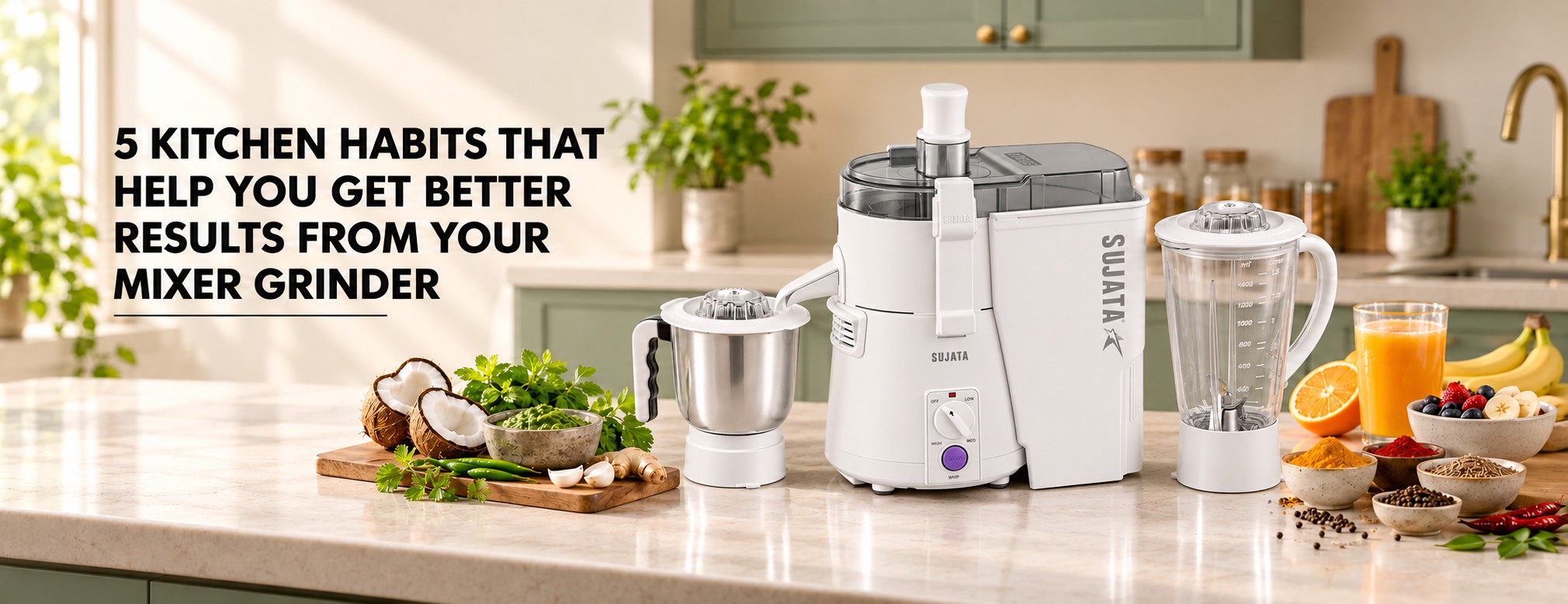
A mixer grinder is one of the most useful appliances in an Indian kitchen. From preparing fresh masalas and grinding spices to making chutneys and pastes for everyday meals, it helps reduce preparation time and effort. However, the quality of your results depends not only on the appliance but also on how you use and maintain it.
Simple habits, such as cutting ingredients into smaller pieces, choosing the correct jar and cleaning the appliance after use, can make everyday grinding easier. These practices can also help reduce unnecessary strain on the motor and keep your appliance in good working condition.
If you use a mixer grinder regularly, here are five kitchen habits that can help you get better results and make the most of your appliance.
Why Your Kitchen Habits Matter When Using a Mixer Grinder
A mixer grinder works with different ingredients, quantities and textures throughout the day. Grinding dry spices requires a different approach from preparing wet pastes or making chutney. Using the correct jar, adding suitable quantities and following the recommended operating time can help you achieve more consistent results.
Good habits also help prevent common problems such as uneven grinding, ingredient spills, overheating and food residue building up around the blades. These small steps make the various uses of a mixer grinder more convenient in your daily routine and help you get more value from your appliance.
For anyone choosing a mixer grinder for home, it is worth remembering that correct usage is just as important as motor power and jar quality. A suitable appliance combined with good kitchen habits can make routine food preparation simpler.
5 Habits for Better Grinding Results
1. Cut Ingredients into Smaller Pieces
Preparing ingredients before putting them into the jar can make grinding easier. Large pieces of ginger, coconut or other firm ingredients may take longer to process and can put extra strain on the motor. Cutting them into smaller, manageable pieces helps the blades process them more evenly.
For example, chop ginger into smaller pieces before preparing ginger-garlic paste. Break coconut into suitable pieces before wet grinding and measure out the spices you need before grinding a masala. This also makes it easier to control the quantity you prepare.
Always follow the manufacturer’s instructions for ingredients that require special preparation. Do not assume that every mixer grinder can handle hard ingredients, frozen foods or other demanding items. Preparing ingredients properly is a simple habit that can improve everyday grinding results.
2. Avoid Overfilling the Jar
It can be tempting to fill the jar completely when preparing food for the family. However, an overloaded jar may leave too little room for the ingredients to move around. This can result in uneven grinding, spills or additional strain on the motor.
Instead, follow the maximum filling level recommended in the user manual. If you need to prepare a large quantity of masala, chutney or paste, divide the ingredients into smaller batches. This allows you to process each batch more comfortably without forcing the appliance to handle too much at once.
For wet grinding, add liquid gradually when the recipe requires it and follow the recommended instructions for your model. Avoid running the appliance with a load that causes the motor to struggle.
Overloading is one of the common mistakes to avoid when using a mixer grinder for home. Working with suitable quantities can make grinding more manageable and help reduce unnecessary interruptions.
3. Use the Right Jar for the Quantity
Different mixer grinder jars are designed for different tasks and quantities. A small jar is useful for grinding a little masala or preparing chutney, while a medium jar may be more suitable for everyday grinding and pastes. A larger blender jar offers more space for larger batches of ingredients.
Using an appropriately sized jar helps you process ingredients more efficiently. For example, a small quantity of dry spices may be difficult to grind evenly in an oversized jar because the ingredients may not reach the blades consistently. Similarly, trying to fit a large quantity of batter into a small jar can make the process inconvenient.
Before starting, check the jar’s intended use and capacity. A mixer grinder for masalas should have a jar suited to the quantity of spices you typically prepare, while a mixer grinder for chutney should offer a convenient option for smaller batches.
Choosing the right jar is one of the most practical habits to develop when using a mixer grinder because it helps you match the appliance to the task instead of relying on a single jar for everything.
4. Give the Motor Short Breaks Between Batches
Preparing several ingredients one after another can make a mixer grinder warm up, particularly when you are grinding dense mixtures or hard spices. Running the motor continuously beyond the recommended operating time can increase the risk of overheating.
Follow the operating instructions supplied with your appliance and allow the motor to rest between batches as directed. If you are preparing multiple masalas or pastes for a family meal, organise the ingredients in advance so you can work through them without rushing the appliance.
Pay attention to unusual sounds, excessive heat or a burning smell. If you notice any of these signs, switch off and unplug the appliance. Allow it to cool and check the instructions before using it again. If the problem continues, contact an authorised service centre.
These precautions are particularly useful when you rely on your mixer grinder for home cooking every day. Good operating habits help reduce unnecessary stress on the motor and support more reliable use over time.
5. Clean and Dry the Jar After Use
Cleaning your mixer grinder after every use helps prevent food residue, stains and strong smells from building up. Ingredients such as coconut, garlic, spices and chutney can stick to the jar or collect around the blades if they are left for too long.
After switching off and unplugging the appliance, remove the jar and clean it according to the manufacturer’s instructions. Use water, mild dishwashing liquid and a soft sponge where appropriate. Handle the blades carefully, especially when cleaning around their edges.
Regular cleaning is one of the simplest ways to maintain the benefits of your mixer grinder. It keeps the appliance ready for the next task and helps prevent residue from affecting the taste or smell of freshly prepared ingredients.
Common Mixer Grinder Mistakes to Avoid
Even a well-designed appliance may not deliver the desired results if it is used incorrectly. Along with following the five habits above, avoid these common mistakes:
- Running the appliance empty: Follow the manufacturer’s instructions and avoid operating the mixer grinder without ingredients when the manual advises against it.
- Using the wrong jar: Choose a jar designed for the ingredient and task rather than using every jar interchangeably.
- Ignoring the recommended running time: Allow the motor to rest as instructed instead of running it continuously for too long.
- Adding too much liquid or too many ingredients: Follow recipe requirements and the jar’s recommended capacity to avoid spills and inconsistent results.
- Ignoring unusual performance: Stop using the appliance if it repeatedly overheats, produces unusual sounds or shows signs of damage.
These precautions can help you use the appliance more confidently and keep everyday preparation manageable.
Choose a Mixer Grinder That Fits Your Kitchen Needs
Explore Sujata Mixer Grinders
Sujata Appliances offers mixer grinders designed for regular Indian cooking, with different motor ratings and jar configurations to suit different household needs. The range includes 900W models such as DYNAMIX and SUPERMIX, as well as 1000W models such as MG01, MG02 and MG03.
The models vary in their jar configurations and features. For example, the MG01 comes with a 1.75-litre transparent blender jar, a 1-litre dry grinding jar and a 500 ml chutney jar. The MG02 features a 1.5-litre stainless-steel blender jar, a 1-litre dry grinding jar and a 500 ml chutney jar.
Sujata’s mixer grinder range also includes double ball-bearing motors and safety features such as overload protection and secure lid-locking mechanisms, as listed on its official product range page. These specifications can help you compare options based on your everyday cooking requirements.
Consider Motor Power and Jar Options
When choosing a mixer grinder, consider the ingredients you prepare, how frequently you use the appliance and the quantities you usually process. A household that regularly grinds spices and makes chutneys may prioritise suitable small and medium jars, while a family that prepares larger batches may find a larger blender jar useful.
Motor power is another important consideration. Sujata’s 900W and 1000W models offer options for different kitchen requirements, but the right choice depends on the tasks you perform and the product’s overall specifications.
A 500-watt mixer grinder may suit some lighter tasks, depending on its design. However, if you regularly grind tough ingredients or prepare large quantities, it is better to switch to a 900W mixer grinder for greater power and support with demanding kitchen tasks. Households that frequently process demanding ingredients should compare motor ratings and manufacturer recommendations carefully. Do not choose an appliance based on wattage alone; jar capacity, blade design, safety features and operating instructions also matter.
If you are looking for a kitchen mixer grinder, review the official Sujata product details and choose a model that fits your routine. The right combination of features, along with good daily habits, can help you get consistent results from your appliance.
FAQs About Using a Mixer Grinder
How can I get a finer grind in a mixer grinder?
Cut ingredients into smaller pieces, use the jar intended for the task and process ingredients in manageable quantities. For dry spices, use a suitable dry-grinding jar and follow the recommended speed and operating time. Make sure the jar and blades are clean before starting.
Why should I avoid overfilling the mixer grinder jar?
Overfilling can restrict the movement of ingredients and make grinding uneven. It may also cause spills and place additional strain on the motor. Follow the recommended filling level and process large quantities in smaller batches for better results.
How often should I clean my mixer grinder?
Clean the jar and lid after every use to prevent food residue and odours from building up. Use a soft sponge and mild detergent where appropriate and dry all parts thoroughly before storing them. Wipe the motor base separately and never immerse it in water. Follow the manufacturer’s cleaning instructions for your specific model.